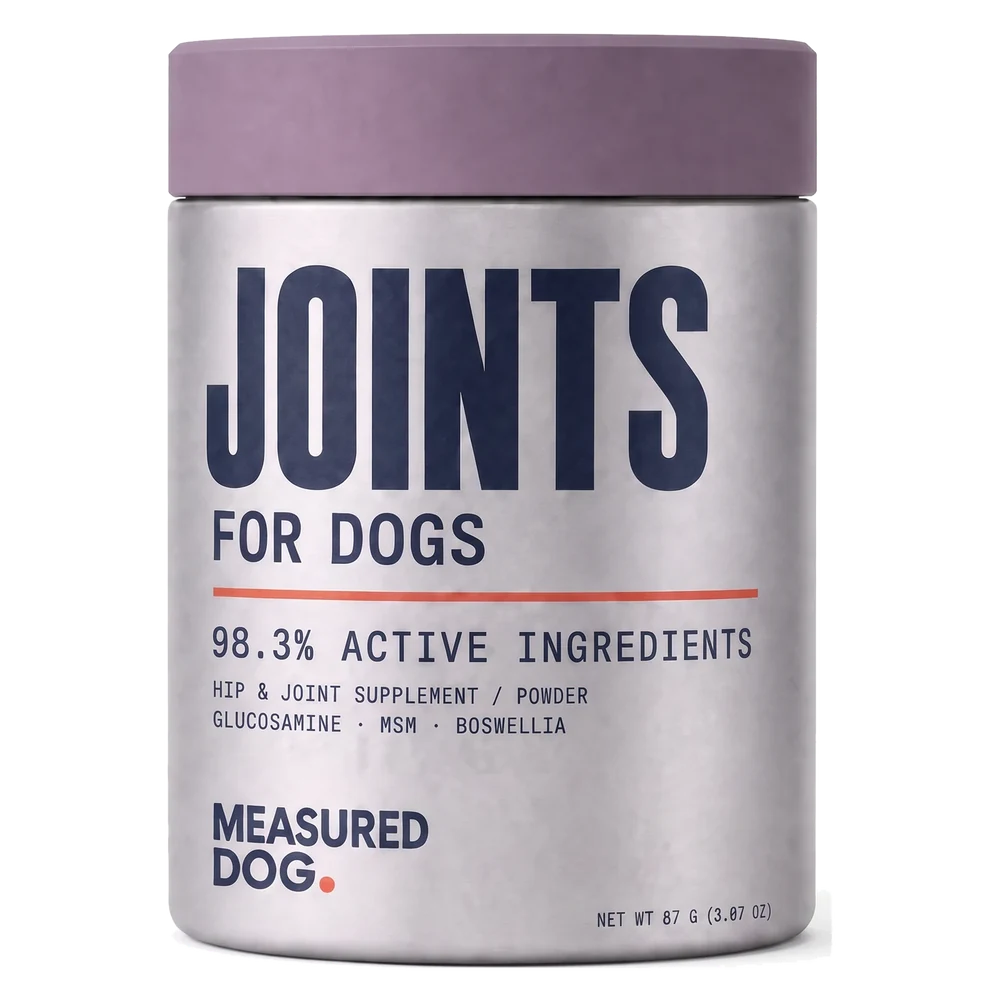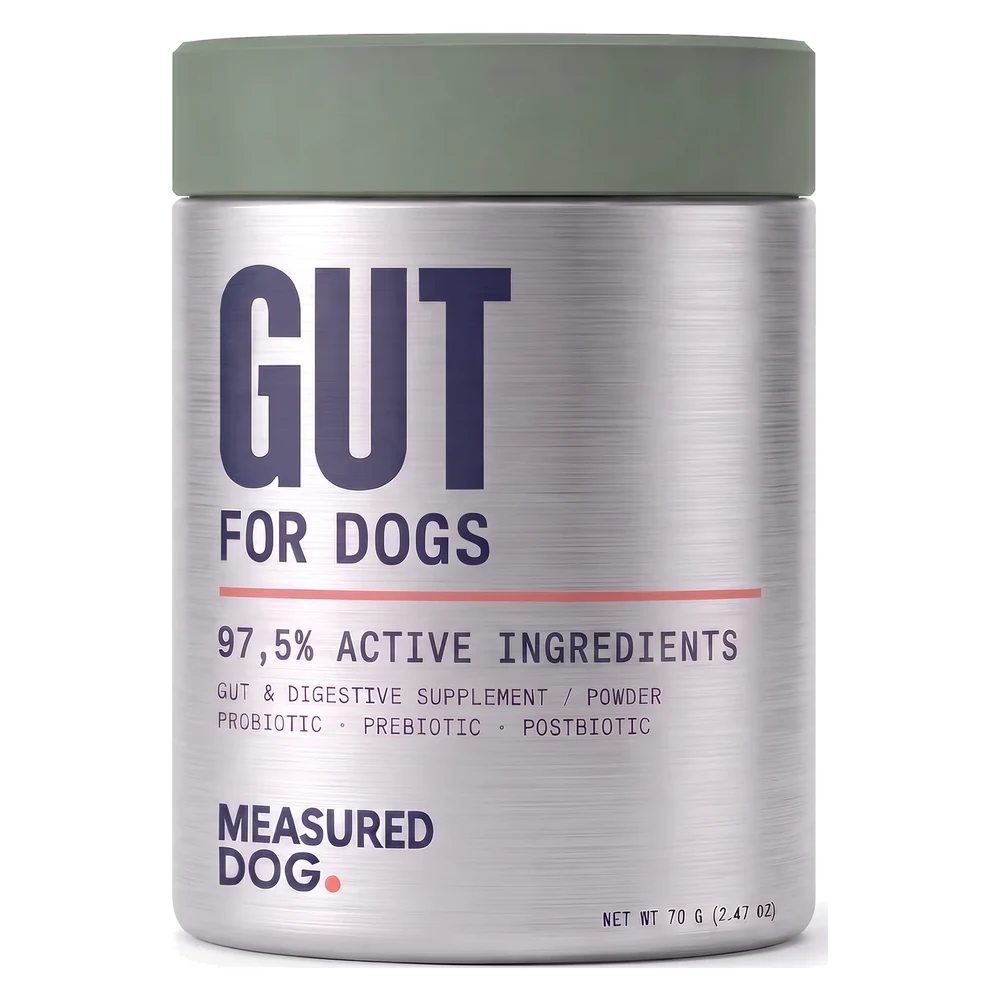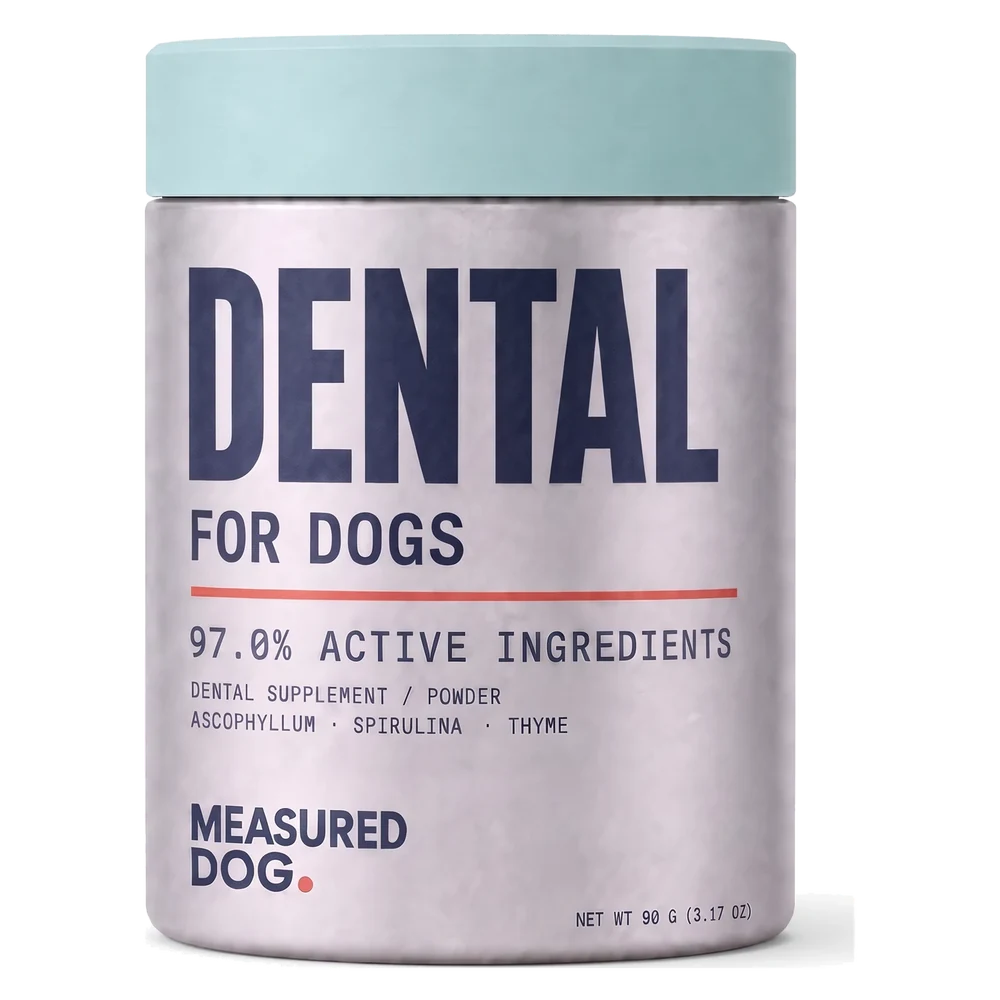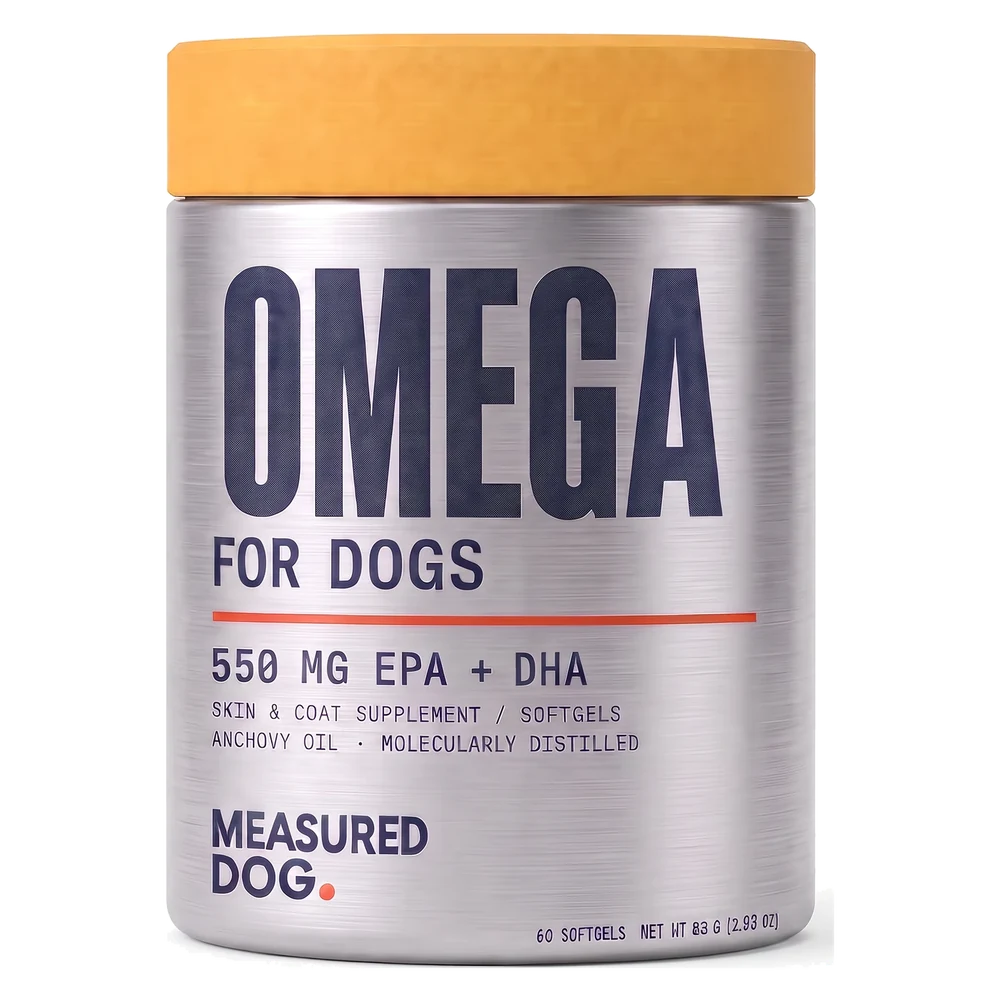
Every active. Every milligram. Every study.
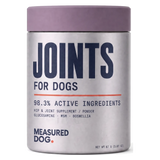
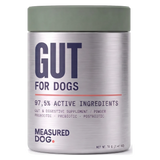
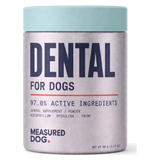
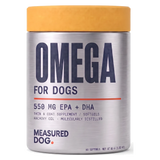
These are the four ingredient panels exactly as they are printed on the labels - per daily serving for a 90 lb dog, with the research each ingredient is based on. No proprietary blends, nothing rounded, nothing hidden inside a tub size.
The amounts below are the full daily serving for a 90 lb (41 kg) dog - three level 1.45 g measures a day. Smaller dogs get proportionally less: two measures from 45 to 89 lb, one under 45 lb. One measure per 45 lb of body weight, printed on the label rather than hidden in a tub size.
| Ingredient | Per day | Research |
|---|---|---|
| GlucosamineGlucosamine sulfate · Deep Joint Regeneration Complex™ The most extensively studied joint ingredient in dogs and the largest single active in the formula. Second stage, working alongside collagen and green-lipped mussel. | 1,440 mg | View clinical study ↗ |
| MSMMethylsulfonylmethane · Rapid Relief Formula™ An organic sulphur compound. It sits in the first stage, the one built around everyday comfort and freedom of movement. | 1,350 mg | View clinical study ↗ |
| Boswellia SerrataIndian frankincense extract · Rapid Relief Formula™ An extract of the frankincense tree and one of the most established botanicals used for canine mobility. First stage of the formula. | 450 mg | View clinical study ↗ |
| Green-Lipped MusselPerna canaliculus · Deep Joint Regeneration Complex™ A New Zealand shellfish extract and the ingredient in this formula with the largest body of published canine research behind it. Second stage. | 450 mg | View clinical study ↗ |
| Hydrolyzed Type II CollagenHydrolyzed, chicken source · Deep Joint Regeneration Complex™ Supplies the building blocks that cartilage is made from. Second stage of the formula, the one measured in months rather than weeks. | 300 mg | View clinical study ↗ |
| BromelainPineapple stem enzyme · Rapid Relief Formula™ A proteolytic enzyme from pineapple stem, included to support a healthy inflammatory response alongside MSM and Boswellia. | 150 mg | View clinical study ↗ |
| Vitamin CAscorbic acid · Deep Joint Regeneration Complex™ A required cofactor for collagen synthesis. It is in the formula so that the collagen alongside it has what it needs to be put to use. | 135 mg | View clinical study ↗ |
| PiperineBlack pepper extract · Absorption Piperine is not in this formula for the joints. It is here so the rest of the formula absorbs better, which is why the dose is small and why it works across both stages. | 3 mg | View clinical study ↗ |
| Total actives per daily serving | 4,278 mg |
The amounts below are the full daily serving for a 90 lb (41 kg) dog - three level 1.17 g measures a day. Smaller dogs get proportionally less: two measures from 35 to 69 lb, one under 35 lb. One measure per 35 lb of body weight, printed on the label rather than hidden in a tub size.
| Ingredient | Per day | Research |
|---|---|---|
| Inter Yeast SBrewer's yeast, Saccharomyces cerevisiae · Healthy Gut Complex™ Half the formula by mass, and the largest single active. The yeast is inactivated, which is what makes it a postbiotic rather than a second live culture: you are getting the compounds yeast produces, delivered ready-made. It is also the one part of the formula that does not depend on anything surviving the stomach. | 1,740 mg | View clinical study ↗ |
| Chicory InulinFrom chicory root · Healthy Gut Complex™ The prebiotic. Food for the bacteria already living in him and for the ones arriving in the same measure. A probiotic without a prebiotic is a delivery with nowhere to live. | 900 mg | View clinical study ↗ |
| L-GlutamineFree amino acid · Easy Digestion Formula™ The preferred fuel of the cells lining the intestine. It is what the wall itself runs on. | 600 mg | View clinical study ↗ |
| AmylaseAspergillus oryzae · Easy Digestion Formula™ Declared the way enzymes are actually measured - in activity units, not milligrams. Amylase breaks starch down in the bowl he is eating from right now. Dogs are not equal here: how much amylase a dog makes on his own depends on how many copies of the AMY2B gene he inherited. | 6,120 U | View clinical study ↗ |
| LipaseAspergillus oryzae · Easy Digestion Formula™ Breaks fat down, working on the current meal alongside amylase. | 1,740 FIP | View clinical study ↗ |
| Enterococcus faeciumLive culture, 4b1707 · Healthy Gut Complex™ The live culture, arriving with the meal that also carries its food. The label's per-serving panel declares 1.2 billion CFU in one serving, and a 90 lb dog takes three of them - so 3.6 billion a day. This is the one strain in the jar with a randomised, double-blinded, placebo-controlled trial run on the exact strain we use: owners reported fewer days of loose stools on the diet containing it. | 3.6 billion CFU | View clinical study ↗ |
| Total actives per daily serving | 3,240 mg |
The amounts below are the full daily serving for a 90 lb (41 kg) dog - four level measures a day. Smaller dogs get proportionally less: three measures from 45 to 64 lb, two from 25 to 44 lb, one under 25 lb. One level measure per 22 lb (10 kg) of body weight, in whole measures, printed on the pack rather than hidden in a tub size.
| Ingredient | Per day | Research |
|---|---|---|
| Duck liverHydrolysed, palatant · Palatability The only part of the measure that is not an active ingredient. Three percent, and the reason a dog eats a spoonful of kelp and herbs without arguing about it. | 180 mg | |
| ChlorellaChlorella vulgaris · Oral health The third algae and the smallest active. It completes the marine part of the formula. | 180 mg | View clinical study ↗ |
| Ground SageSalvia officinalis · Breath Working alongside the thyme. Together they are 27% of the formula given over to breath alone - more than most dental powders give to their entire active list. | 420 mg | View clinical study ↗ |
| Ground ThymeThymus vulgaris · Breath One fifth of every measure is thyme, and it is here for one job: breath. Most of the category treats breath as a side effect of cleaner teeth. Here it has its own ingredient, at a dose you can read off the label. | 1,200 mg | View clinical study ↗ |
| SpirulinaArthrospira platensis · Oral health A second marine algae, and the reason this is not a single-ingredient powder. Its stated job on the label is supporting the health of the mouth itself, alongside what the kelp does to the tooth. | 1,620 mg | View clinical study ↗ |
| Ascophyllum nodosumNorwegian sea kelp · Tartar The ingredient the published, placebo-controlled work in this category was done on - and the largest part of this formula by mass. It works on what is already on the tooth, which is why the honest timeline for it is months, not days. | 2,400 mg | View clinical study ↗ |
| Total actives per daily serving | 6,000 mg |
The amounts below are the full daily serving for a 90 lb (41 kg) dog - three softgels a day. Smaller dogs get proportionally less: two softgels from 45 to 89 lb, one under 45 lb. One softgel per 45 lb of body weight, printed on the label.
| Ingredient | Per day | Research |
|---|---|---|
| EPAEicosapentaenoic acid · Vet-Grade 33/22™ Concentration The larger of the two omega-3s in this oil, and the one most of the canine research is built on. In a prospective, randomised, double-blinded, placebo-controlled trial in dogs with osteoarthritis, EPA and DHA improved the clinical signs the veterinarians were scoring - and the researchers went further and measured the EPA and DHA sitting in the dogs' red blood cell membranes. That second part is the one worth reading: it is evidence the fat got into the dog, not just into the bowl. | 330 mg | View clinical study ↗ |
| DHADocosahexaenoic acid · Vet-Grade 33/22™ Concentration The structural one, and the one the skin and coat work is built on. In an eight-week open-label trial, dogs with atopic skin put on a diet built around EPA and DHA had their scratching scores fall by 44% and their redness scores by 48% - scored both by the veterinarian in the clinic and by the owner at home. | 220 mg | View clinical study ↗ |
| Vitamin EAntioxidant · Deep-Pur™ Omega Refining System Not there for him. It is there for the oil - it slows the oxidation that turns a good fish oil into a bad one on the shelf. The peer-reviewed review of what can go wrong with fish-oil omega-3s in dogs and cats lists lipid peroxidation among the risks, and that is exactly why an antioxidant is dosed alongside the oil instead of being left out of it. Same job as the number at the top of this page. | 4 mg | View clinical study ↗ |
Studies are of the ingredients as substances, not of Measured Dog products. They are here so you can see what the doses were set against - not as a promise of results. Results vary between dogs.
Pick the formula, see the full label